Ingredient profile
ASU in SynoCell: Avocado/Soybean Unsaponifiables at a Trial-Level Dose
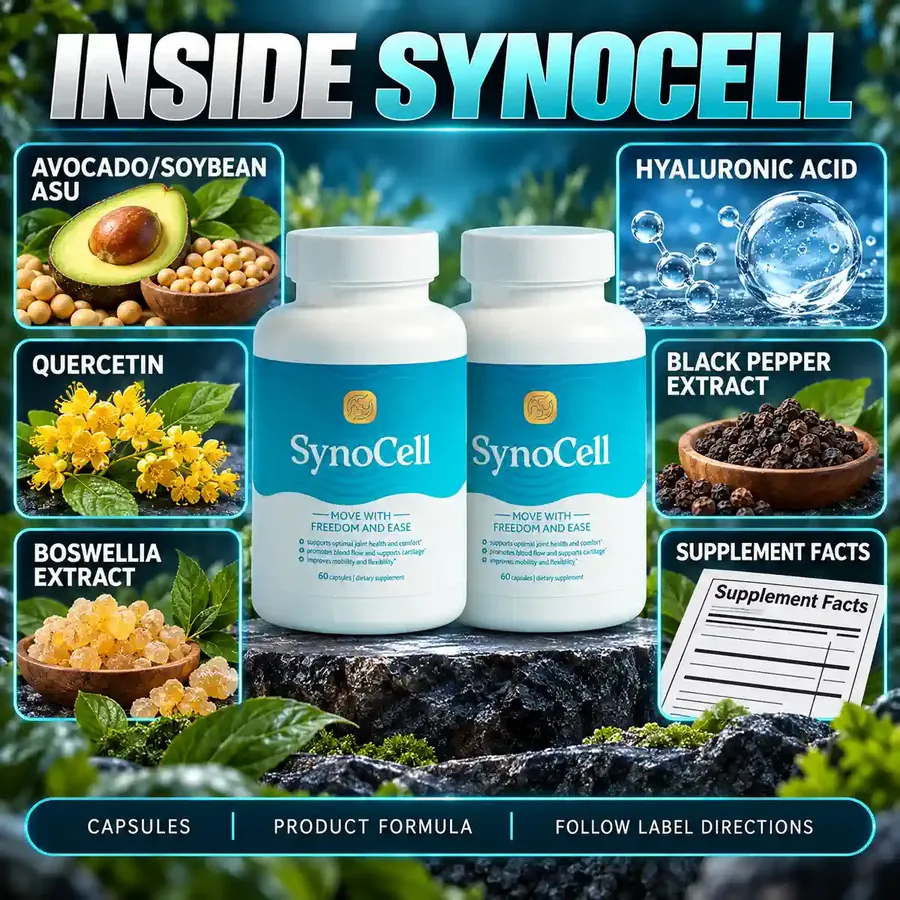
SynoCell lists 310 mg of avocado/soybean unsaponifiables (ASU) per 2-capsule serving, close to the 300 mg a day used in trials. A 2008 meta-analysis of four trials found a small-to-moderate benefit for pain and function, mostly in the knee. All four were industry-funded, and SynoCell's ASU source is not published.
Written by the SynoCell editorial teamUpdated
The basics
What is ASU, and why is it in SynoCell?
ASU stands for avocado/soybean unsaponifiables. It is the small part of avocado and soybean oils that does not turn into soap when processed.
That fraction holds plant sterols and other fat-soluble compounds. It is used in France, where safety monitoring has tracked it (AF supplement guide). In SynoCell, ASU is listed first, at 310 mg per serving, tied with quercetin as the largest amount.
The brand's product page names it "Avocado/Soybean Unsaponifiables (ASU)." It does not say which supplier made it or the avocado-to-soy ratio. Those details matter, as the research below shows.
| Label name | Avocado/Soybean Unsaponifiables (ASU) |
|---|---|
| What it is | Plant fractions of avocado and soybean oils · Plant oil extract |
| Position on the label | Printed with its own amount |
| Amount per serving (2 capsules) | 310 mg, printed |
| Amount used in research | 300 mg a day in trials |
| Strength of evidence | Small benefit, mainly knee |
| Why it is used | Studied for knee and hip osteoarthritis symptoms |
| Main caution | Made from avocado and soybean: ask first if you have a soy or avocado allergy. |
Dose check
Is 310 mg of ASU the same dose used in studies?
Nearly. SynoCell's 310 mg is about 3% above the 300 mg a day used in the trials. The Arthritis Foundation lists 300 mg a day as the usual dose (AF supplement guide).
| Measure | SynoCell | ASU trials |
|---|---|---|
| Daily amount | 310 mg (2 capsules) | 300 mg |
| Length | Refund window: 90 days | 3 to 12 months |
| ASU product | Source not published | One specific branded ASU mix |
| Other ingredients alongside | Four more | None; ASU tested alone |
The dose lines up. The product may not. Trials used one particular ASU mix, and results from one extract do not automatically carry over to another (FTC health products).
At a glance
ASU research by the numbers
Evidence
What did the ASU trials actually find?
They found a small-to-moderate benefit, mostly in the knee. A 2008 meta-analysis by Christensen and colleagues pooled four trials with 664 people over 3 to 12 months (ASU meta-analysis (DARE)).
The results in plain words
- Pain eased a little more on ASU than on a dummy pill.
- Daily function, such as walking and stairs, improved a little too.
- About 1 in 6 people improved who would not have on placebo.
- Knee results were clear. Hip results were not statistically significant.
The fine print
The four trials were small, their results varied, and all were funded by industry (ASU meta-analysis (DARE)). A later Arthritis Foundation review rated the evidence weak and the gains modest (AF 12 supplements). NCCIH called ASU's improvements slight, possibly too small for patients to notice (NCCIH OA).
The Arthritis Foundation also notes a 2008 review linked ASU to less use of NSAID pain pills (AF supplement guide). Do not cut back on a prescribed medicine on your own, though.
What it means
What can SynoCell's ASU realistically do?
At best, a small change in knee comfort over several months. ASU is not a treatment for osteoarthritis, and SynoCell has never been tested as a formula.
The trials ran 3 months or longer. So a fair test means taking 2 capsules a day for most of the 90-day refund window. Track a few things you can count, such as stairs climbed, minutes walked, or how stiff you feel when you get up.
Joint guidelines put exercise, weight loss and self-management first, with strong recommendations (AF guideline summary). A supplement, at most, sits on top of them.
The results timeline explains how to judge any joint supplement inside 90 days.
Safety
Is ASU safe, and who should avoid it?
ASU has a good safety record so far. The Arthritis Foundation reports that French safety monitoring found no significant problems (AF supplement guide).
ASU comes from avocado and soybean oils and can trigger allergic reactions (AF 12 supplements). The brand's web pages print no allergen statement. Ask your doctor first, and read your bottle's label.
The other SynoCell ingredients carry their own medicine cautions, especially quercetin and black pepper extract. ASU itself has no well-known drug interactions in our sources.
Our view
Is the ASU in SynoCell worth it?
ASU is the best-dosed and best-studied ingredient in SynoCell. The benefit in trials was small, and the trials used a different product.
Pros
- 310 mg, matching the 300 mg studied
- Amount printed, not hidden in a blend
- Reassuring safety monitoring data
Cons
- Small benefit, mainly for knees
- Few trials, all industry-funded
- Source and avocado-to-soy ratio not published
Keep exploring
Which SynoCell ingredients come after ASU?
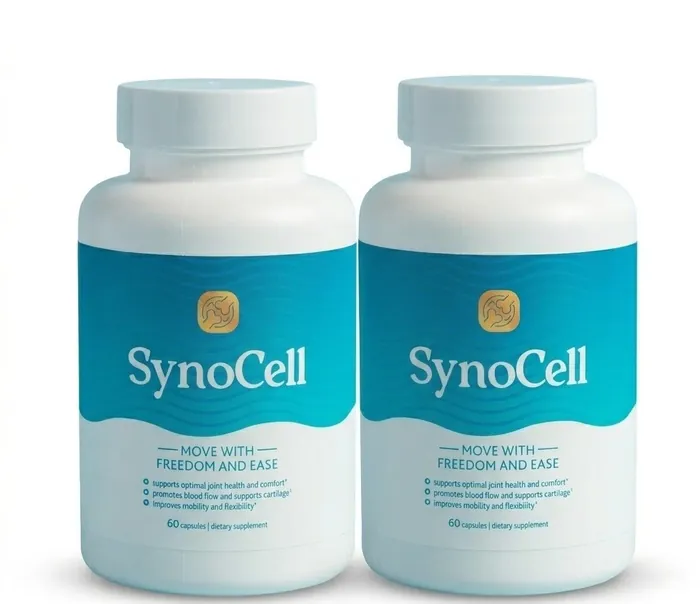
Quercetin is listed second, at the same 310 mg, though with far weaker evidence for joints. Boswellia follows at 200 mg. The full ingredient guide compares all five side by side.
FAQ
ASU in SynoCell: common questions
How much ASU is in SynoCell?
SynoCell lists 310 mg of avocado/soybean unsaponifiables (ASU) per 2-capsule serving, according to the brand's product page. That is close to the 300 mg a day used in clinical trials. Check the label on your bottle, since the brand's web pages are our only source for the amount.
Does ASU work for knee pain?
ASU may help knee pain a little. A 2008 meta-analysis of four trials found a small-to-moderate benefit for knee pain and function at 300 mg a day (ASU meta-analysis (DARE)). NCCIH says the gains were slight and may not feel meaningful to patients (NCCIH OA).
Does ASU help hip arthritis?
The evidence for hips is weaker than for knees. In the 2008 meta-analysis, hip results were not statistically significant (ASU meta-analysis (DARE)). ASU is not a treatment for hip osteoarthritis, so a doctor or physical therapist should guide care for a painful hip.
How long does ASU take to work?
ASU trials lasted 3 to 12 months, so any benefit may take weeks to months to show (ASU meta-analysis (DARE)). No study set a firm timeline. With SynoCell, use the full 90-day refund window to judge it, and track walking and stairs.
What are the side effects of avocado soybean unsaponifiables?
ASU side effects appear uncommon. French safety monitoring found no significant problems, per the Arthritis Foundation (AF supplement guide). Because ASU comes from avocado and soybean, allergic reactions are possible (AF 12 supplements). Stop taking it and call your doctor if you notice a rash, itching or swelling.
Is the ASU in SynoCell the same ASU used in the trials?
We cannot confirm that. The ASU trials tested a specific branded mix, but SynoCell's product page does not name its ASU supplier or its avocado-to-soy ratio. Ask the brand at [email protected] which ASU it uses before assuming the trial results apply.
Who wrote this
Written and reviewed by
Plain-language pages built from the bottle label, the order page and linked public health sources such as NIH, FDA and CDC.
Last updated . See our editorial standards and how we check reviews. This website is run by a U.S. retail desk for SynoCell, not by the manufacturer. This site earns money when you buy through our order links.
Keep reading
More about SynoCell
Quercetin
Quercetin is SynoCell's joint-largest ingredient, with the weakest joint evidence and real medicine cautions.
Read moreBoswellia serrata
Boswellia is printed at 200 mg in SynoCell. How it compares with trial doses, and the stomach and bleeding cautions.
Read more
Side effects
SynoCell side effects ingredient by ingredient, the medicine interactions that matter most, and when to stop.
Read moreLicensed U.S. retail desk for SynoCell
Ready to try SynoCell?
Pick a pack. Two capsules a day; the 3- and 6-bottle packs cover the whole 90-day window.
- Secure brand checkout
- 90-day money-back window
- Free U.S. mainland shipping