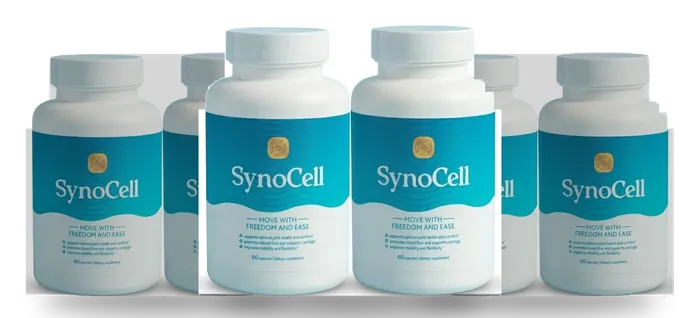
Ingredient profile
Hyaluronic Acid in SynoCell: 180 mg in Capsules, Not an Injection
SynoCell lists 180 mg of hyaluronic acid per 2-capsule serving. You swallow it; it is not injected. The only verified guideline evidence is about injections, and the 2019 ACR/Arthritis Foundation guideline advises against them in the hip and conditionally against them in the knee (ACR/AF 2019 guideline). Evidence for hyaluronic acid capsules is uncertain and not verified in our sources.
Written by the SynoCell editorial teamUpdated
The basics
What is hyaluronic acid, and why is it in SynoCell?
Hyaluronic acid is a molecule your body makes. Your joints already contain it as part of their natural fluid.
It is also found in skin and eyes. Supplement makers sell it in capsules, and doctors use a different, purified form for joint injections. Those two uses are not the same thing, and they should not be judged by the same research.
SynoCell lists hyaluronic acid fourth on its Supplement Facts panel. The brand's web pages do not say what source it comes from or how large the molecules are. It is one of five ingredients the brand sells for joint comfort and mobility.
| Label name | Hyaluronic acid |
|---|---|
| What it is | Sodium hyaluronate family · Joint-fluid molecule |
| Position on the label | Printed with its own amount |
| Amount per serving (2 capsules) | 180 mg, printed |
| Amount used in research | Oral research not verified in our sources; guidelines discuss injections only |
| Strength of evidence | Uncertain (oral form) |
| Why it is used | A natural part of joint fluid, sold as capsules |
| Main caution | Injection results do not apply to capsules; ACR advises against hip injections. |
On the label
How much hyaluronic acid is in each SynoCell serving?
The brand's product page lists 180 mg of hyaluronic acid per 2-capsule serving. That amount is printed in full, like every other SynoCell ingredient. There is no proprietary blend hiding the number.
| Label name | Hyaluronic acid |
|---|---|
| Amount per serving | 180 mg (2 capsules) |
| Form | Swallowed in a capsule |
| Source (animal, fermentation) | Not published |
| Molecular weight | Not published |
| Salt form (such as sodium hyaluronate) | Not published |
| Daily Value | Not established (**) (FDA Labeling Ch IV) |
Source and molecule size can matter to buyers who avoid animal products or who compare brands. Ask the brand at [email protected] if those details matter to you, and read the label on your bottle.
Two different things
Is hyaluronic acid in capsules the same as a knee injection?
No. A hyaluronic acid injection goes straight into the joint, given by a doctor. A capsule is swallowed and digested like other food. Research on one form cannot be used to judge the other.
| Question | Capsule (as in SynoCell) | Injection into the joint |
|---|---|---|
| How it is given | Swallowed, 180 mg a day in SynoCell | Injected into the joint by a clinician |
| Where it goes | Through the gut first | Directly into the joint space |
| Regulated as | Part of a dietary supplement | A medical treatment |
| 2019 ACR guideline view | Not addressed | Against in the hip; conditionally against in the knee (ACR/AF 2019 guideline) |
| Evidence in our sources | Uncertain, not verified | Reviewed by the guideline panel |
You may see claims that hyaluronic acid "helps knees" with no form named. Most of that talk traces to injections. Capsule sellers should not borrow injection results, and readers should not either.
Guidelines
What do joint guidelines say about hyaluronic acid?
The guideline that counts most in the U.S. speaks only about injections. The 2019 American College of Rheumatology and Arthritis Foundation guideline advises strongly against hyaluronic acid injections in the hip. It advises conditionally against them in the knee and at the base of the thumb (ACR/AF 2019 guideline).
The same guideline does not mention hyaluronic acid taken by mouth at all (ACR/AF 2019 guideline). It also skips ASU, boswellia and quercetin. So it neither supports nor rejects SynoCell's formula.
What the guideline does recommend
Its strong recommendations are exercise, weight loss for knee and hip arthritis, self-management programs, tai chi, canes and braces, and NSAID pain relievers (AF guideline summary). Those steps have far better evidence than any capsule. The SynoCell osteoarthritis guide explains them in plain words.
What is unknown
Does oral hyaluronic acid work for joints?
We cannot say. Our checked sources contain no verified trial of hyaluronic acid capsules for joint pain. Small studies of oral forms may exist, but we have not opened and verified them, so we do not summarize them.
- No trial of SynoCell itself has been published.
- No verified oral dose exists in our sources to compare with the 180 mg printed.
- Whether swallowed hyaluronic acid reaches the joints in useful amounts is not settled in the sources we checked.
- Injection findings, good or bad, do not transfer to capsules.
The FTC says claims need research that matches the product's dose and formula (FTC health products). For hyaluronic acid capsules, that research is missing from everything we checked. We mark the evidence as uncertain and leave it there.
Safety
Is hyaluronic acid in capsules safe?
Our sources report no specific safety warning for oral hyaluronic acid. That is not the same as proof of safety. It means the sources we checked do not study it.
The bigger safety questions in SynoCell come from other ingredients. Quercetin may interact with warfarin and losartan (MSKCC Quercetin). Boswellia may raise bleeding risk with blood thinners (MSKCC Boswellia). Black pepper extract may raise blood levels of some medicines (BioPerine review).
Bring the bottle to your pharmacist if you take a blood thinner, losartan or other prescription drugs. Pregnant or nursing? There are no safety data for this formula, so ask your doctor first (NCCIH supplements wisely).
Our view
Should hyaluronic acid capsules sway your decision?
Probably not much either way. The 180 mg amount is printed, which is honest. But the evidence for capsules is unverified, so it is hard to count it as a reason to buy.
Pros
- 180 mg printed in full, no blend
- A natural part of joint fluid
- No specific safety warning in our sources
Cons
- Oral evidence uncertain and not verified
- Source and molecule size not published
- Guideline advice covers injections only
- No trial of SynoCell itself
If your knee is hot, red or very swollen, or it locks or gives way, see a doctor. The SynoCell label breakdown puts all five ingredients side by side.
Keep exploring
Which SynoCell ingredients come before and after hyaluronic acid?
Boswellia comes just before it on the panel, at 200 mg. Black pepper extract closes the list at 5 mg. Browse every ingredient profile below.

FAQ
Hyaluronic acid in SynoCell: common questions
How much hyaluronic acid is in SynoCell?
SynoCell lists 180 mg of hyaluronic acid per 2-capsule serving, according to the brand's product page. The source, salt form and molecule size are not published. Check the Supplement Facts on the bottle you receive.
Do hyaluronic acid capsules work like knee injections?
No, they are different treatments and cannot be judged by the same research. Injections go into the joint; capsules are swallowed. The 2019 ACR/Arthritis Foundation guideline covers injections only, and it advises conditionally against them in the knee (ACR/AF 2019 guideline).
Does oral hyaluronic acid help joint pain?
The evidence for oral hyaluronic acid is uncertain and not verified in the sources we checked. We found no verified trial of capsules for joint pain, and no trial of SynoCell itself. We do not claim a benefit.
Does the ACR recommend hyaluronic acid?
Not as an injection for the hip, and only conditionally against it for the knee, per the 2019 ACR/Arthritis Foundation guideline (ACR/AF 2019 guideline). The guideline does not address hyaluronic acid taken by mouth.
Is hyaluronic acid in SynoCell vegan?
The brand's web pages do not say. Hyaluronic acid can come from animal or fermentation sources, and SynoCell does not publish which it uses or what the capsule shell is made of. Email [email protected] to ask before you buy.
Can hyaluronic acid capsules fix worn knee cartilage?
No source we checked shows that hyaluronic acid capsules fix worn cartilage, and SynoCell is not a treatment for cartilage damage or osteoarthritis. The CDC says osteoarthritis is managed with physical activity, a healthy weight and joint protection (CDC OA).
Can I take hyaluronic acid with blood thinners?
Our sources list no specific hyaluronic acid interaction. But SynoCell also contains quercetin and boswellia, which carry warfarin and bleeding cautions (MSKCC Quercetin) (MSKCC Boswellia). Ask your doctor before taking the whole formula with a blood thinner.
Who wrote this
Written and reviewed by
Plain-language pages built from the bottle label, the order page and linked public health sources such as NIH, FDA and CDC.
Last updated . See our editorial standards and how we check reviews. This website is run by a U.S. retail desk for SynoCell, not by the manufacturer. This site earns money when you buy through our order links.
Keep reading
More about SynoCell
Boswellia serrata
Boswellia is printed at 200 mg in SynoCell. How it compares with trial doses, and the stomach and bleeding cautions.
Read moreBlack pepper extract (BioPerine)
SynoCell has 5 mg of BioPerine. How black pepper extract boosts absorption, and why that matters for your medicines.
Read more
Oral hyaluronic acid vs injections
Why the injection guideline does not apply to capsules, and what is honestly known about 180 mg taken by mouth.
Read moreLicensed U.S. retail desk for SynoCell
Ready to try SynoCell?
Pick a pack. Two capsules a day; the 3- and 6-bottle packs cover the whole 90-day window.
- Secure brand checkout
- 90-day money-back window
- Free U.S. mainland shipping