Joint health guide
Joint Pain Exercise Plan: Exercise Comes First, SynoCell Second
Exercise is the first step for joint pain, and SynoCell is at most an add-on. The 2019 ACR/Arthritis Foundation guideline strongly recommends exercise, weight loss for hip and knee osteoarthritis, self-management and tai chi. Each pound lost takes 3 to 6 pounds of load off the knee.
Written by the SynoCell editorial teamUpdated · 9 min read
What doctors advise
What do guidelines recommend first for joint pain?
Exercise, weight loss and self-management come first. The Arthritis Foundation's summary of the 2019 guideline lists them among its strong recommendations for osteoarthritis, along with tai chi, canes and braces, and NSAID pain relievers (AF guideline summary).
"Strong" means the panel was confident most people would benefit. Supplements do not appear on that list. The guideline advises against glucosamine and does not rate ASU, boswellia, quercetin or oral hyaluronic acid at all (ACR/AF 2019 guideline).
| Approach | Guideline position | Cost to try |
|---|---|---|
| Exercise (walking, strength, water) | Strongly recommended | Low |
| Weight loss, hip and knee | Strongly recommended | Low |
| Self-management programs | Strongly recommended | Low |
| Tai chi | Strongly recommended | Low |
| Cane or knee brace | Strongly recommended | Low to moderate |
| Glucosamine | Strongly against | Not advised |
| ASU, boswellia, quercetin, oral hyaluronic acid | Not addressed | Varies |
The reason
Why does exercise help stiff, sore joints?
Exercise eases pain and stiffness in osteoarthritis, says the National Institute of Arthritis and Musculoskeletal and Skin Diseases (NIAMS OA). Aerobic activity and strength work both help, according to a StatPearls clinical review (StatPearls OA).
Strong muscles around the knee and hip take some of the work off the joint. Regular movement also keeps the joint's range of motion from shrinking. Stiffness after rest, the classic osteoarthritis pattern, often eases once you get moving (CDC OA).
Osteoarthritis does not go away, but it can be managed. The CDC points to physical activity, a healthy weight and joint protection as the main tools, and recognizes more than 20 group programs for activity and self-management (CDC OA).
Many people fear that moving a sore joint will wear it out faster. For most people with osteoarthritis, the guidelines say the opposite: the right kind of movement is part of care.
Weight and the knee
How much does weight change the load on your knees?
A lot. Each pound of body weight lost cuts the load on the knee 3 to 6 fold, per StatPearls (StatPearls OA). The American College of Rheumatology adds that losing 10 pounds over 10 years can cut the chance of knee osteoarthritis by up to 50% (ACR OA patient).
In plain numbers
What does 10 pounds mean for your knees?
Losing 10 pounds could take roughly 30 to 60 pounds of force off each knee with every step, using the 3 to 6 fold range (StatPearls OA). Over thousands of steps a day, that adds up.
You do not need a dramatic diet to see a change. Small, steady losses count. Walking, water exercise and strength work burn some calories, but food changes usually drive weight loss more than exercise alone.
If weight is a struggle, ask your doctor about a dietitian or a program. Weight loss is one of the strongly recommended steps for hip and knee osteoarthritis (AF guideline summary), so it is worth real support.
Weight matters most for knees and hips, the joints that carry you.
A gentle start
What does a simple weekly exercise plan for joint pain look like?
A good starting week mixes short walks, two strength sessions and some gentle movement such as tai chi. Treat the plan below as a starting point to show your doctor or physical therapist, not a prescription.
| Day | Activity | How long |
|---|---|---|
| Monday | Easy walk on flat ground | 10-15 minutes |
| Tuesday | Strength: sit-to-stand from a chair, wall push-ups, seated leg lifts | 15 minutes |
| Wednesday | Easy walk, or water walking in a pool | 10-15 minutes |
| Thursday | Tai chi or gentle stretching class or video | 15-20 minutes |
| Friday | Strength, same moves as Tuesday | 15 minutes |
| Saturday | Longer walk or bike ride at an easy pace | 15-20 minutes |
| Sunday | Rest, or a short stroll | As you like |
Add a few minutes each week if your joints feel the same or better the next day. Mild aching that settles within a day or so is common at the start. Sharp pain or swelling that lasts is a sign to scale back and check in.
Make it stick
How do you start exercising when your joints hurt?
Start small, pick activities you can repeat, and track how you feel. These four steps keep it simple.
Warm up first
Move the joint gently for a few minutes before you walk or lift. Morning stiffness usually eases within 30 minutes (NIAMS OA), so later in the day may feel easier.
Choose low-impact moves
Walking, cycling, swimming and water exercise are easier on knees and hips than running or jumping.
Use support
A cane or knee brace is a strongly recommended option (AF guideline summary). Good shoes help too.
Write it down
Note minutes, steps or stairs, and a 0 to 10 pain score each week. Progress is easier to see on paper.
Group classes, such as the CDC-recognized programs, can help with motivation. More detail on knee and hip care is in the knee and hip joint guide.
Where a supplement fits
Where does a supplement like SynoCell fit in?
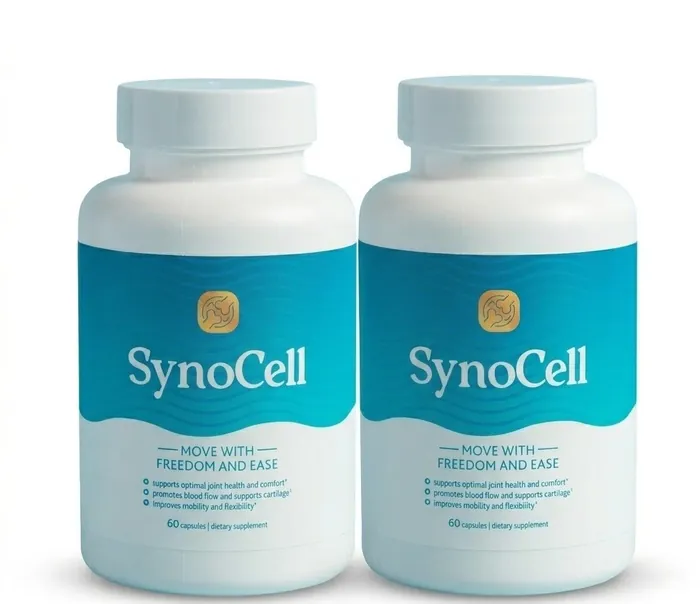
At most, a supplement sits on top of exercise and weight management. It does not replace them. SynoCell is a dietary supplement, not a treatment for osteoarthritis or any disease.
- 01
Read the label
Five ingredients, each with its own printed amount. Check them against your medicines and allergies.
- 02
Take two capsules
Two capsules a day, per the brand page. Follow the directions on your bottle.
- 03
Keep moving
Exercise and weight management do the heavy lifting for joints. A supplement sits on top of them.
- 04
Judge it by day 90
Track stairs, walks and stiffness. Ask for a refund inside 90 days if it is not for you.
The ingredient with the clearest research is ASU. SynoCell lists 310 mg, close to the 300 mg a day used in trials that found small benefits for pain and function, mainly in the knee (ASU meta-analysis (DARE)). The NCCIH notes that ASU and boswellia gave slight improvements that patients may not find meaningful (NCCIH OA).
So the honest order is: move, manage weight, use the tools your doctor suggests, and then, if you want, try a supplement and judge it fairly. Take 2 capsules a day, the serving the brand lists, and follow the directions printed on your bottle. Details are in how to use SynoCell.
Stay safe
When should joint pain stop you exercising and see a doctor?
Stop and get checked if a joint is hot, red or very swollen, if you have a fever, or after a sudden injury. A joint that locks or gives way, or pain that wakes you at night, also needs a medical visit.
Quercetin, boswellia and black pepper extract in SynoCell can interact with some medicines, including blood thinners and losartan. Ask your pharmacist before you start.
Your doctor can also look at the wider picture. The osteoarthritis guide explains symptoms, risk factors and treatment options in more detail.
FAQ
Exercise and joint pain questions
What is the best exercise for knee osteoarthritis?
The best exercise is one you will do regularly. Guidelines strongly recommend aerobic, strengthening and water exercise, plus tai chi, for knee osteoarthritis (AF guideline summary). Walking and chair-based strength moves are an easy, low-cost start.
Should I rest a painful knee or keep moving?
For most people with osteoarthritis, keep moving gently. Exercise reduces pain and stiffness (NIAMS OA). Rest a joint that is hot, red, very swollen or recently injured, and see a doctor about it.
How much weight loss eases the load on knees?
Even a little helps. Each pound lost cuts knee load 3 to 6 fold (StatPearls OA), and losing 10 pounds over 10 years can lower the chance of knee osteoarthritis by up to 50% (ACR OA patient).
Can SynoCell replace exercise for joint pain?
No. SynoCell is a dietary supplement, and joint guidelines put exercise and weight management first (AF guideline summary). Its best-studied ingredient, ASU, showed only small benefits in trials, so treat it as a possible add-on at most.
Is walking good for arthritis in the hips?
Yes, walking is a low-impact activity that suits many people with hip osteoarthritis. Start with 10 to 15 minutes on flat ground, add time slowly, and use a cane if your doctor suggests one.
How long until exercise helps joint pain?
It varies from person to person, so give a new routine several weeks. Track your minutes and a weekly pain score so you can see the change. Keep going even if progress feels slow.
Where does SynoCell fit in a joint pain plan?
After the basics. Guidelines put exercise, weight loss and self-management first, and SynoCell, taken as 2 capsules a day, is at most an add-on to that base.
Does losing weight help sore knees more than SynoCell?
Guidelines list weight loss ahead of supplements for hip and knee osteoarthritis, and each pound lost takes 3 to 6 pounds of load off the knee. SynoCell is at most an add-on to that.
How many SynoCell capsules fit into a daily routine?
The daily serving is 2 capsules. They sit beside exercise, weight management and self-care, not in place of them.
Who wrote this
Written and reviewed by
Plain-language pages built from the bottle label, the order page and linked public health sources such as NIH, FDA and CDC.
Last updated . See our editorial standards and how we check reviews. This website is run by a U.S. retail desk for SynoCell, not by the manufacturer. This site earns money when you buy through our order links.
Keep reading
More about SynoCell

Osteoarthritis guide
What osteoarthritis is, who gets it, what doctors recommend first and where a joint supplement fits.
Read more
Knee and hip guide
Why knees and hips differ, how much weight loss lightens the load, and what ASU did for each joint.
Read moreHow to use
The SynoCell serving, what the brand does and does not say about timing, missed doses and a simple daily routine.
Read moreLicensed U.S. retail desk for SynoCell
Ready to try SynoCell?
Pick a pack. Two capsules a day; the 3- and 6-bottle packs cover the whole 90-day window.
- Secure brand checkout
- 90-day money-back window
- Free U.S. mainland shipping