Health guide
Osteoarthritis Guide: Symptoms, Risk Factors and Where a Supplement Like SynoCell Fits
Osteoarthritis (OA) is wear and change inside a joint that causes pain with movement and stiffness after rest. About 33 million U.S. adults have it, the CDC says (CDC OA). It cannot be cured, but exercise, weight management and self-management ease it, and guidelines put them first (AF guideline summary). A supplement such as SynoCell is an optional extra, not a treatment.
Written by the SynoCell editorial teamUpdated
The basics
What is osteoarthritis?
Osteoarthritis is the most common form of arthritis. The smooth cartilage that covers the ends of bones slowly breaks down, and the joint becomes painful, stiff and sometimes swollen (MedlinePlus OA).
It is not only "wear and tear". The whole joint changes: the bone underneath, the lining and the tissue around it. That is why two people with similar X-rays can feel very different.
OA most often affects the hands, knees, hips, neck and lower back, the NIH arthritis institute explains (NIAMS OA). It usually builds over years, not weeks.
Many people have it without knowing. About 80% of U.S. adults over 65 show OA on X-rays, and about 60% of those have symptoms, according to a StatPearls review (StatPearls OA).
How it feels
What are the common symptoms of osteoarthritis?
The classic sign is pain that comes with movement and eases with rest. Stiffness after sitting or first thing in the morning is the second clue.
Pain with use
Worse on stairs, after a long walk or at the end of the day. Rest usually helps.
Short morning stiffness
Usually under 30 minutes (NIAMS OA). Longer stiffness can point to another kind of arthritis.
Swelling and less motion
The joint may look puffy, feel unstable or not bend as far as it used to (CDC OA).
Some people also hear or feel a grating or clicking. On its own, that noise is not a reason to worry.
Who gets it
What raises the risk of osteoarthritis?
Age, past joint injury and extra body weight are the big three. Some risks you can change and some you cannot.
| Risk factor | Can you change it? | What it means |
|---|---|---|
| Age | No | OA is more common after 45 |
| Female sex | No | More common in women, especially after 50 |
| Family history | No | OA tends to run in families |
| Past joint injury | Partly | An old knee or ankle injury raises the odds later |
| Obesity | Yes | Extra weight loads the knees and hips |
| Low activity | Yes | Weak muscles give the joint less support |
Weight has the clearest payoff. The American College of Rheumatology says every 10 pounds lost over 10 years can cut the chance of knee OA by up to 50% (ACR OA patient). The knee and hip guide does the load math.
Osteoarthritis in numbers
How common is osteoarthritis in the U.S.?
Sources: CDC (CDC OA), NIAMS (NIAMS OA), StatPearls (StatPearls OA), ACR (ACR OA patient).
What doctors try first
What do osteoarthritis guidelines recommend first?
Exercise, weight loss and self-management come first. The 2019 American College of Rheumatology and Arthritis Foundation guideline gives these its strongest recommendation (AF guideline summary).
Move every day
Walking, cycling, water exercise and strength work all count. Exercise eases pain and stiffness, NIAMS notes (NIAMS OA).
Lose some weight if you carry extra
Even a few pounds take load off the knees and hips.
Learn to manage it
Self-management classes, tai chi, a cane or a knee brace are all strongly recommended (AF guideline summary).
Add medicine if needed
Topical and oral NSAIDs come next. Your doctor weighs their stomach, kidney and heart risks.
Surgery last
Joint replacement is for advanced cases that other steps cannot settle (NIAMS OA).
The CDC lists more than 20 proven physical activity and self-management programs for arthritis (CDC OA). Many are free or low cost. The exercise-first article covers simple ways to start.
The honest picture
Where do joint supplements fit in osteoarthritis care?
Supplements sit at the edge of OA care, after the steps above. Most have weak or mixed evidence, and some popular ones failed in large trials.
The guideline strongly recommends against glucosamine and against hyaluronic acid injections in the hip (ACR/AF 2019 guideline). A trial of about 1,600 people, called GAIT, found no clear overall benefit from glucosamine and chondroitin (AF glucosamine).
Other ingredients have a little more support. The National Center for Complementary and Integrative Health says ASU and boswellia gave slight improvements that patients may not find meaningful (NCCIH OA). The guideline does not address ASU, boswellia, quercetin or oral hyaluronic acid at all (ACR/AF 2019 guideline).
A supplement may add a small benefit for some people. It does not replace movement, weight management or medicine your doctor prescribes.
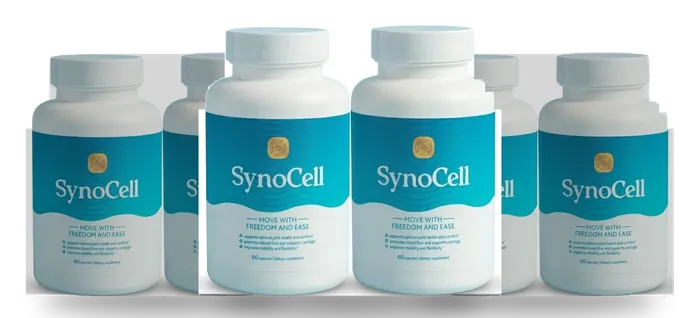
SynoCell and OA
What does SynoCell offer someone with osteoarthritis?
SynoCell offers one ingredient at a studied dose and four with thinner support. It is a dietary supplement sold for joint comfort and mobility, not a treatment for OA.
| Ingredient | Per 2 capsules | What OA research shows |
|---|---|---|
| ASU | 310 mg | Small benefit for knee pain and function at 300 mg a day (ASU meta-analysis (DARE)) |
| Boswellia extract | 200 mg | May reduce OA pain; better studies needed (NCCIH Boswellia) |
| Quercetin | 310 mg | No verified joint dose; not shown to treat any disease (MSKCC Quercetin) |
| Hyaluronic acid | 180 mg | Capsule evidence not verified; guidelines cover injections only (ACR/AF 2019 guideline) |
| Black pepper extract | 5 mg | Raises absorption of other compounds (BioPerine review) |
No trial has tested SynoCell itself. If you try it, take 2 capsules a day, the serving the brand lists, and follow the directions printed on your bottle. Quercetin, boswellia and black pepper extract may interact with medicines, so a pharmacist check comes first. The side effects page has the full list.
Day to day
How can I live well with osteoarthritis day to day?
Small habits add up. Keep moving, pace your activity and protect the joint without babying it.
- Split long walks into two shorter ones on bad days.
- Use a handrail on stairs and a cane in the hand opposite the sore hip or knee.
- Wear supportive walking shoes with a firm heel and a flexible sole.
- Warm up for five minutes before exercise and stretch gently after.
- Keep a simple diary of pain, stiffness and steps so you can spot patterns.
Flares happen. Rest a day or two, then ease back in. Long rest makes joints stiffer.
Red flags
When should I see a doctor about joint pain?
See a doctor if joint pain is new, severe or changing quickly. Some signs need a prompt visit, not a supplement trial.
A hot, red or very swollen joint, fever, a sudden injury, a joint that gives way or locks, or pain that wakes you at night.
A check also makes sense before starting any supplement if you take a blood thinner, losartan or several prescription medicines.
FAQ
Osteoarthritis and SynoCell FAQ
What are the first signs of osteoarthritis in the knee?
The first signs are usually knee pain on stairs or after walking, and stiffness after sitting that eases within about 30 minutes. Swelling, a grinding feeling and less bending can follow. A doctor can confirm OA with an exam and sometimes an X-ray, and rule out other causes.
Can osteoarthritis be reversed?
No, osteoarthritis cannot be reversed or cured with any current treatment, according to the CDC and MedlinePlus. It can be managed well, though. Exercise, weight loss, self-management and, when needed, medicine reduce pain and help people stay active for years.
Is walking good for osteoarthritis?
Yes, walking is one of the best things for osteoarthritis of the knee and hip. Exercise is a strong recommendation in the 2019 ACR and Arthritis Foundation guideline. Start with short walks on flat ground, build up slowly, and rest a day if a flare comes.
Do joint supplements help osteoarthritis?
Some joint supplements show small benefits, but most evidence is weak. ASU at 300 mg a day helped knee pain a little in four trials, while glucosamine did poorly in the large GAIT trial. Guidelines put exercise and weight loss well ahead of any supplement.
Is SynoCell safe to take with osteoarthritis medicine?
SynoCell may interact with some medicines, so ask a pharmacist before combining them. Quercetin and boswellia carry blood thinner cautions, quercetin should not be taken with losartan, and black pepper extract may raise levels of drugs processed by the liver. Tell your doctor before any surgery too.
Who is most likely to get osteoarthritis?
Osteoarthritis is most likely in adults over 45, women after 50, people with obesity, people with a past joint injury, and those with a family history of OA. Weight and activity are the risks you can change, and both make a real difference.
When is joint pain not osteoarthritis?
Joint pain may not be osteoarthritis when it comes with heat, redness, fever, a sudden injury, or morning stiffness lasting well over 30 minutes. Gout, infection or rheumatoid arthritis can cause these signs and need prompt medical care.
Who wrote this
Written and reviewed by
Plain-language pages built from the bottle label, the order page and linked public health sources such as NIH, FDA and CDC.
Last updated . See our editorial standards and how we check reviews. This website is run by a U.S. retail desk for SynoCell, not by the manufacturer. This site earns money when you buy through our order links.
Keep reading
More about SynoCell

Knee and hip guide
Why knees and hips differ, how much weight loss lightens the load, and what ASU did for each joint.
Read more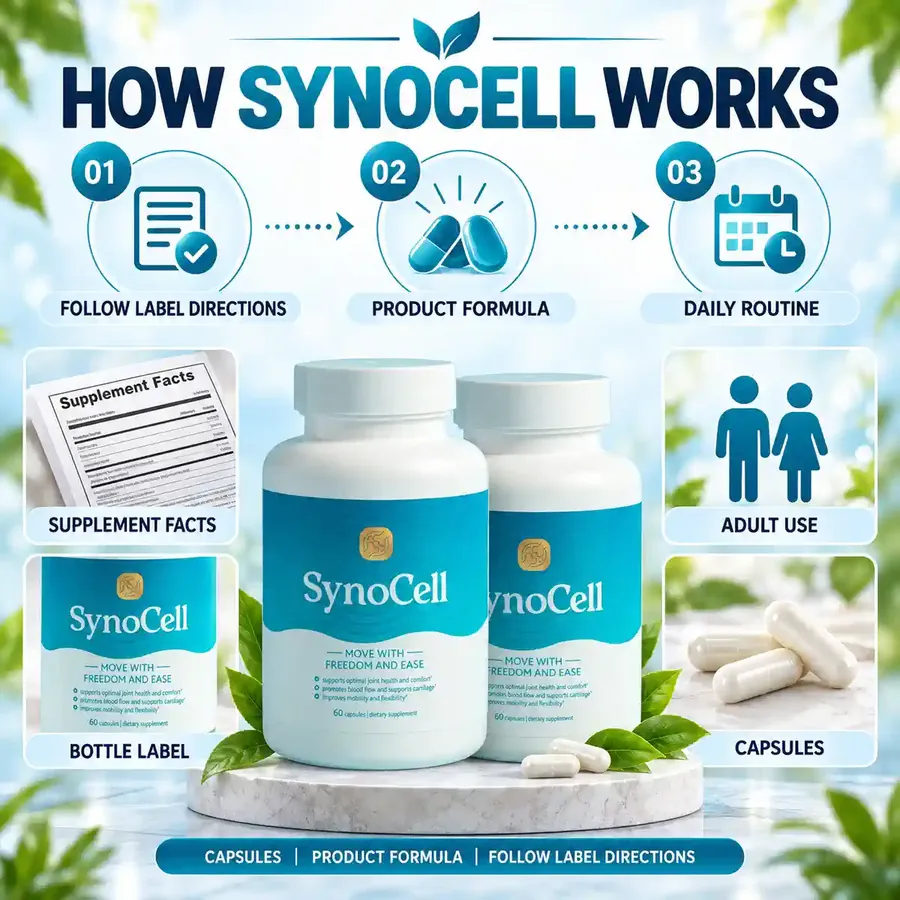
Choosing a joint supplement
Eight checks that work on any joint supplement, with a fair scorecard for SynoCell.
Read moreSide effects
SynoCell side effects ingredient by ingredient, the medicine interactions that matter most, and when to stop.
Read moreLicensed U.S. retail desk for SynoCell
Ready to try SynoCell?
Pick a pack. Two capsules a day; the 3- and 6-bottle packs cover the whole 90-day window.
- Secure brand checkout
- 90-day money-back window
- Free U.S. mainland shipping