Claims check
SynoCell Fact Check: Nine Claims and the Label
This SynoCell fact check sets nine claims beside the printed label and written policies. Supported: five printed amounts, no proprietary blend and a written 90-day refund policy. SynoCell is a dietary supplement, not a medicine.
Written by the SynoCell editorial teamUpdated · 6 min read
Medically reviewed by Dr. Priya Reddy, MD, FACR, Physician · Review date:
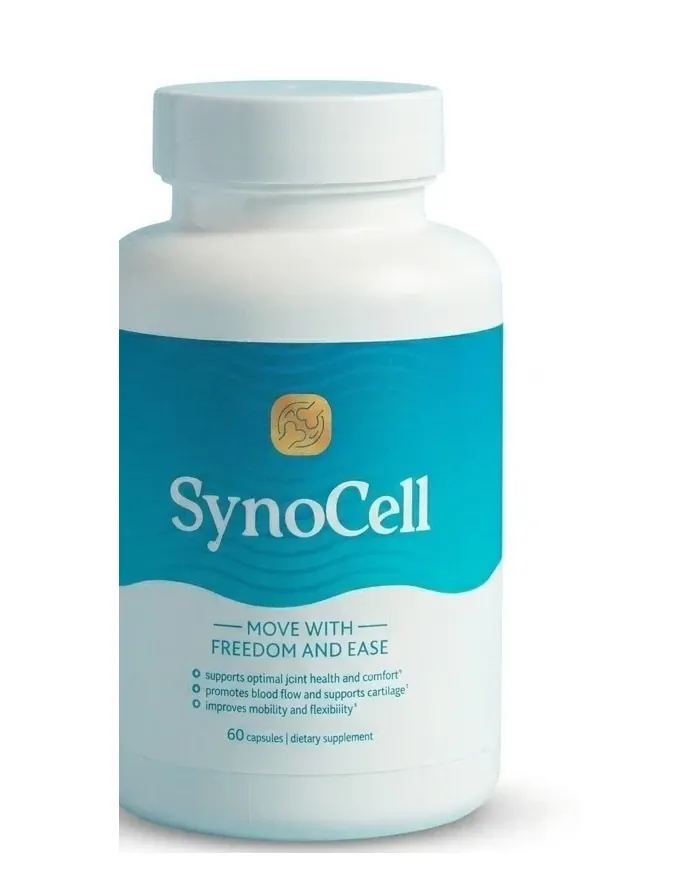
- Printed on the label panel: ASU 310 mg, quercetin 310 mg, boswellia extract 200 mg, hyaluronic acid 180 mg, black pepper extract 5 mg. That adds up to 1,005 mg per 2 capsules.
- No trial of SynoCell itself has been published.
- The brand's "Pain-Free Pledge" is a refund policy, not a promise of pain relief.
- No lab report is public. The lot and certificate codes are seller reference codes, not lab proof.
- Supplements may not claim to treat disease, and the FDA does not approve them before sale.
Try SynoCell with the 90-day window in viewIf the label and the written terms look fair to you, the order page shows the current price and the full guarantee wording.
See today's price and guaranteeThis site earns money when you buy through its order links. The button opens the brand's own order page.
How we check
How does a SynoCell fact check work?
A fair SynoCell fact check needs a rule for what counts as proof. Ours is short.
A claim is "supported" when the printed label, a written policy or a named public source backs it. It is "not shown" when we looked and found nothing. We do not call a claim false just because it is unproven. We also leave out the brand's talk of cartilage, discs and inflammation, because supplements may not make disease claims (FDA S/F claims).
We do not re-test bottles. Every fact below comes from this site's own pages, the brand's published label facts and the sources linked beside each point.
The nine claims
Which claims pass the SynoCell fact check?
Here is the whole check in one table. The sections after it explain the four that need more words.
| Claim | Finding | Basis |
|---|---|---|
| Every amount is printed, with no blend | Supported | The label panel lists five amounts, 1,005 mg in total |
| The ASU dose matches the trials | Close | 310 mg printed; 300 mg a day was studied (ASU meta-analysis (DARE)) |
| Black pepper extract helps absorption | Partly | 5 mg printed, the same as in absorption studies (BioPerine review) |
| It rebuilds or lubricates cartilage | Not shown | No trial of SynoCell; disease claims are not allowed |
| "Move with freedom and ease" | A label line | Standard FDA statement says it is not evaluated |
| The "Pain-Free Pledge" guarantees relief | Not true as worded | It is a conditional refund policy |
| Good Manufacturing Practice badge | Unverified | No certifier or audit report is named |
| Lot and certificate codes prove testing | Not true | They are seller reference codes, not a lab report |
| Customer ratings prove it works | Not shown | No verified review is published here |
Dose claims
Does the SynoCell label match the research doses?
For ASU, close. SynoCell prints 310 mg and trials used 300 mg a day for 3 to 12 months. A review of four trials found a small benefit, mainly for the knee (ASU meta-analysis (DARE)). For black pepper extract, the 5 mg amount matches the dose used in absorption studies (BioPerine review).
For boswellia, the label shows 200 mg of an extract standardized to 65% boswellic acids. Studies used up to 1,000 mg a day, so the label sits well below that top figure. For quercetin, no verified joint dose exists to compare with 310 mg. The oral hyaluronic acid dose is also not verified.
So the fair finding is mixed. Two of five lines line up with studied amounts. Three do not have a clean research match. Our posts on the boswellia dose and the ASU research give the detail.
Big claims
Is it true that SynoCell rebuilds cartilage?
Nothing the site uses supports that. No trial of SynoCell exists, and a dietary supplement may not claim to treat or reverse a disease. The brand's marketing goes further than its own FDA disclaimer allows, and this site does not repeat those lines.
Osteoarthritis has no cure. The steps doctors name first are exercise and weight care. Read our post on cartilage and SynoCell for the full explanation.
Name versus terms
Does the Pain-Free Pledge promise pain relief?
No. The brand's name for its refund policy sounds like a promise, but the written terms are narrower. You use SynoCell as directed for 30 days, then ask within 90 days of purchase. Shipping and handling are deducted, and the policy allows up to 10% to be withheld. The FDA lists a promised outcome as a sign of health fraud (FDA 6 tip-offs), which is why the wording matters.
Seals and codes
Do the badges and codes prove quality?
They do not. The Good Manufacturing Practice and registered-facility badges are brand graphics, and no outside auditor is named. A registered facility is a listing with the FDA, not approval (FDA 101). The lot code SC-26/MY-4084 and the certificate code SC-4084-26-MY are seller reference codes. A real lab report names the lab, the lot, the date and the measured results.
FAQ
Frequently asked questions
Is SynoCell clinically proven?
No trial of SynoCell itself has been published. Some single ingredients have research. ASU at 300 mg a day showed a small benefit, mainly for the knee, in a review of four trials.
Is SynoCell FDA approved?
No. SynoCell is a dietary supplement, and the FDA approves no supplement before sale. Its label carries the standard statement that its claims were not evaluated by the FDA.
Does the label list every ingredient amount?
Yes for the five active ingredients, 1,005 mg in total per serving. The other ingredients, warnings and storage directions are not published on the brand's web pages.
Is the lab report public?
No. No testing lab is named and no report is published. Ask [email protected] for the report for your lot.
Does SynoCell treat osteoarthritis?
No. It is not a treatment for osteoarthritis, cartilage damage or any disease.
Who checks the facts on this site?
The SynoCell editorial team writes each page, and Dr. Priya Reddy, MD, FACR, reviews it for accuracy against the label and the cited sources.
Does SynoCell use a proprietary blend?
No. The label prints five separate amounts per 2 capsules: ASU 310 mg, quercetin 310 mg, boswellia extract 200 mg, hyaluronic acid 180 mg and black pepper extract 5 mg.
Does the SynoCell Pain-Free Pledge promise pain relief?
Read it as a brand pledge, not proof of results. No trial of SynoCell itself has been published, and the written refund policy is 90 days. Check the terms before you rely on the wording.
Does SynoCell have a 90-day refund policy?
Yes, the brand lists a written 90-day money-back policy.
Our honest take
Our view
Our view: the label side of the story is stronger than the marketing side. The amounts are printed, the refund terms are written down and one ingredient is dosed near the studied level. The big promises, from cartilage to guaranteed relief, are not backed by anything we can check.
If you try it, treat it as a 90-day test next to exercise, and keep your own notes. Ask a pharmacist first if you take warfarin, losartan or other prescription medicines. The testing and quality page shows what the brand does and does not publish, and our post on whether SynoCell is legit covers the seller side.
Still curious? Read the label firstRead the label and the refund terms first. If they fit you, the order page shows what the brand charges today.
See today's price and guaranteeThis site earns money when you buy through its order links. The button opens the brand's own order page.
Last updated . Written by the SynoCell editorial team and medically reviewed by Dr. Priya Reddy, MD, FACR, Physician (review date October 26, 2026). This page is general information, not medical advice. SynoCell is a dietary supplement. It is not FDA approved, and no supplement is. Ask your doctor or pharmacist about your own case.